How an Increase in Deaths Is Uncovering Uncomfortable Truths About The Modern Fitness Industry
Shawn Rhoden. Cedric McMillan. Jodi Vance. A Mr. Olympia champion, an Arnold Classic champion, and a young aspiring physique competitor. Different paths with the same passion, yet all have passed before the age of 50; Jodi died at 20. Unfortunately, their untimely deaths are not isolated tragedies but a part of a growing pattern in the bodybuilding and “fitness” world.
In fact, by the time we publish this, there will likely be more deaths of young influencers. More and more individuals are dying from the sport that was supposed to be about health, and it’s occurring at younger and younger ages. Worse? These effects are leaking into the general population and harming the fitness industry as a whole.
More and more followers are experiencing extreme practices, while others associate “fitness” with “steroids” and unachievable aesthetics. The reality is that bodybuilding and health no longer walk hand in hand. Is it time to separate the two? And how does this affect the future of health and fitness?
Key Points You Need To Know!
In the beginning, bodybuilding and gym culture were synonymous with health
Aesthetics used to be a signifier of health. Over time, aesthetics became more important than health.
More and more deaths are occurring in not just athletes but amateur influencers and the general public.
Bodybuilding is a sport, not fitness or a healthy lifestyle, and a clear distinction should be made.
Origins: When Bodybuilding Was Health
“No citizen has a right to be an amateur in the matter of physical training… what is a disgrace to the body is a disgrace to the soul.” –Aristotle.
Bodybuilding, and fitness in general, did not begin as it is in its current state. In its original form, it was truly about fitness and optimizing function of the body.
Going all the way back to antiquity, great philosophers like Aristotle and Plato believed physical training was inseparable from the development of the mind. The gymnasium was not only a place to build strength but also health, intellect, and discipline, as they were believed to be of the same.
Fitness = Health. If you weren’t fit, you weren’t healthy, and you can’t be healthy without being fit.
The Birth Of Bodybuilding
Over time, fitness and training went through various phases but evolved.
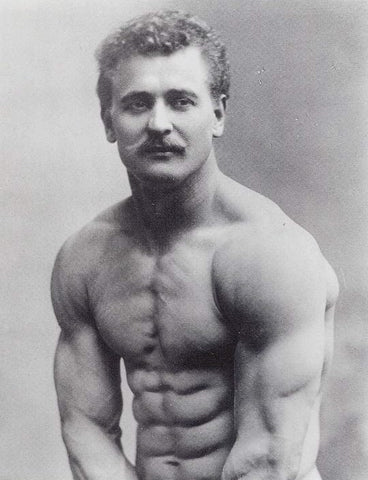
Fast forward to the late 1800s, with the rise of the physical culture movement led by figures like Eugen Sandow, the father of modern bodybuilding. They preached that strength training built vitality, symmetry, and resilience in addition to health.
Eugen actually used his knowledge of fitness to build a career as a “physician”, serving the likes of King George V and King George I of England. Exercise was legitimately believed to be medicine and used as such.
By the mid-20th century, the message was carried on by pioneers like Jack LaLanne, who brought weightlifting, swimming, and nutrition into living rooms across the US and world. Most famously, he towed 70 boats with 70 people, a mile and a half through Long Beach Harbor.
Long before any mainstream, modern medicine began to fully realize the health benefits of strength training, LaLanne promoted it as a tool for everyday health and independence.
With an incredible physique that any guy would want, he still preached health and an active lifestyle as the primary goal of exercising; his aesthetics was just the result of that.
Even competitive bodybuilders at the time placed emphasis on symmetry and healthy amounts of mass. Steve Reeves is a prime example of how elite physiques also portrayed health.
During this time, “bodybuilding” was still closely linked to health and fitness as a broader cultural ideal. There was no such thing as “functional” or “longevity” training because there was no reason to separate it from bodybuilding and the gym.
The Golden Era: The Lines Begin To Blur
The 1970s ushered in what we call bodybuilding’s Golden Era, when the sport still carried a certain harmony between health, aesthetics, and inspiration. This is when greats like Arnold Schwarzenegger, Franco Columbu, and Frank Zane were born.
These champions were able to build a significant amount of mass yet remained athletic. While the Golden Era still held onto the illusion of health, this is when the line became blurry. Their aesthetics were jaw-dropping and still seemed to be achievable if one put in the dedication and work.
In reality, these bodies couldn’t be attained without risk, and this is when PEDs made their grand entrance; it was just a very hush-hush grand entrance.
Still, their training emphasized strength, proportion, and conditioning. PEDs were used as a tool to achieve this ultimate aesthetic physique rather than a tool to put on sheer size.
Most importantly, many of the bodybuilders during this time went on to promote fitness, general health, and an active lifestyle:
Arnold Schwarzenegger
Lee Haney
Frank Zane
Bill Pearl
Dave Draper
Steve Reeves
Lou Ferrigno
But there was a glimpse of what was to come with Sergio Oliva, a massive competitor from Cuba. He was the link between the Golden Era and the new breed of mass monsters and one of the first to demonstrate how crazy things were about to get.
Mass Monsters & Extremes: The Great Divorce Of Bodybuilding and Health
Sergio Oliva brought bodybuilding to the threshold of health, but he managed to walk the line. Outrageous physique yet still somehow aesthetic to the core.
Competitors in the 1990s erased the connection completely.
Bodybuilding had entered the era of the mass monsters, a period defined not by proportion or health, but by this relentless pursuit of size at any cost.
In elite levels of any sport, competitors always push boundaries to reach new extremes. The problem in bodybuilding is that it didn’t mean running faster or hitting more home runs; it meant packing on more mass with a lower percentage of body fat.
Athletes like Dorian Yates and later Ronnie Coleman pushed the boundaries of human muscle mass to unprecedented levels. The judging criteria shifted to: bigger was better, and conditioning meant shredded to the bone.
To keep up, competitors resorted to increasingly aggressive performance-enhancing drug stacks. This included not just anabolic steroids, but growth hormone, insulin, and diuretics.
The Promotion Of Unachievable Physiques
Arnold and Zane had already achieved this superhuman aesthetic. Even today, most look back at these as being the best physiques we’ve ever seen. This left athletes with only one way to stand out: Put on a ton of mass and throw away the aesthetics of the Golden Era.
The emphasis on sheer size resulted in blockier physiques and distended stomachs brought about by dangerous practices:
Extreme bulking phases that pushed body weights into the 270–300 lb range.
Brutal contest preps involving starvation-level calories and dehydration protocols.
Diuretic use strips every ounce of water before stepping on stage, pushing the heart and kidneys to their limits.
Stimulants in and out of the gym to burn fat push massive amounts of energy.
The result was a widening gap between bodybuilding as a sport and fitness as a model of health that became very obvious, even to the general public.
It was clear that the elite levels of bodybuilding were not about health. However, up until now, these extreme bodies and heavy use of PEDs were relatively constrained to those in the sport.
But this wouldn’t last with the internet and the rise of social media. Obsession with aesthetics and the means to acquire it would eventually bleed into the mainstream.
Soon enough, 16 and 17-year-olds would be openly injecting themselves with Tren and eating dBol on live streams, which would be met with laugh emojis and likes.
The Reality Check: What Bodybuilding Has Become
The extreme pursuit of aesthetics that was once reserved for those aspiring to be on stage now exists in mainstream gym culture. PED use has exploded outside of the sport of bodybuilding and has become common for younger and younger lifters to cycle drugs with no intention of competing.
In the past, even amongst users, it was an unwritten rule that you should lift and follow a program for at least several years before even thinking about using it. The belief was you should maximize your results naturally before hopping on.
“Earn your right to use,” if you will. PEDs were meant to optimize, not be used as a shortcut. When young lifters broke that rule, they were openly criticized.
Now, many openly admit to using it to “skip those years of training”. Many begin using even before their natural testosterone has even peaked. Why would they wait when the primary reason for lifting had become aesthetics? That can be fast-tracked quite cheaply.
PED Use In Body Building Vs. Other Sports
PED use isn’t unique to bodybuilding and is seen in many sports. However, in those sports, the use is framed for what it is: performance enhancement. It’s controversial, but at least the context is clear: it’s about competition, not health or beauty; Other sports may like any aesthetic benefit, but they use to lift more, run faster, cycle longer, or hit more home runs.
In bodybuilding and fitness, aesthetics is overwhelmingly the primary goal. What makes it even worse is that athletes and influencers merge their physiques with talk of “fitness” and “health.” They sell programs, supplements, and lifestyles under the guise of wellness, yet carry physiques only obtainable on extensive stacks of “spicy compounds.”
This wouldn’t necessarily be as big an issue except for one important detail: many lie about it. This further confuses the population, as those unfamiliar with bodybuilding just believe what people say. If a commenter suggests PED use, they’re called out for “coping” or being a “hater”.
This blurring of lines is what makes bodybuilding’s online culture especially toxic.
Lying about using had become so prevalent that it created an entire genre of social media content, “Natty Or Not”. Altering our hormones to supraphysiological levels had become entertainment and part of a game; yet, still labeled as “fitness and health”.
What’s interesting is we don’t see this same phenomenon in other strength sports like Power Lifting, Olympic Lifting, or Strongman. Perhaps because these are performance-based sectors of resistance training and have never had direct ties to health.
This doesn’t mean they don’t exist; they certainly do. However, you don’t see 20yos blasting gear right before a 700 lb pull for the “Gram”.
Jacked And Cut = Authority
An influencer can provide crucial information about VO2max or cardio for neuroprotection and mitigation of chronic disease. However, if they’re not walking around shredded and jacked year-round, they will be called out and tossed aside.
And who cares about that anyway, because aesthetics is the only reason people train. Right?
This has become a major issue that’s not talked about enough. Many trainers who don’t use, face increasing criticism, and many eventually leave the field; at least online. Not only does this run off good information, but it further saturates the community with PED users.
Now, when a new trainer starts educating themselves, they are literally bombarded with enhanced aesthetics. Sizeflation is real, and it’s nuts.
Even gym influencers who are honest about their use and seen as positive present a problem. While they claim to promote “health” and arguably provide good content, the fact is they wouldn’t be where they are if they had never used.
Now, they do sometimes speak about the steroid epidemic, their past use, and generally advise not using PEDs. But this is like if an ex-gambler made a ton of money gambling and then preached about the dangers of gambling. They tell you that you shouldn’t, yet live a life only possible because they gambled.
The problem is that the effects of steroids are seen everywhere.
Aesthetics Has Overshadowed Health
Perhaps an even greater issue is that the fitness industry as a whole has placed aesthetics and even sports performance as the goal of weight training.
How many times have we heard someone say, “They don’t care about abs,” as an excuse for not training? Or the fact that society has made mocking “gym bros” and “fitness nuts” acceptable?
Ask yourself, do we ever see doctors, nurses, and physicians mocked? Or paramedics? Physios?
This is a larger issue within society as a whole. However, would that same attitude exist if training for healthy blood markers, mitigation of disease, and increasing longevity had been the primary message all along?
Aesthetics and performance are great and well worth pursuing, so this is not suggesting they’re not important. But in reality, this is “Luxury Training”.
It’s like when influencers talk about Bugattis and Richard Mille watches. However, most people just want to get from point A to Point B with a reliable car and a G-Shock (because those things never break!).
Most people have zero desire to step on stage, but everyone wants to live longer with a higher quality of life. So why isn’t that the focus?
Unhealthy Stats From The World Of “Bodybuilding”
If bodybuilding and influencers didn’t blur the line between physique and health, this wouldn’t need to be said. If there were a clear distinction made that the bodies of physique competitors were not the epitome of fitness, there would be no confusion.
Unfortunately, this is not the case. We routinely see individuals who are clearly using questionable methods while promoting health.
1. Mental Health, Depression, and Suicide
Body Dysmorphia– As high as 53.6% of bodybuilders, higher than strength athletes, and general fitness practitioners (Cerea et al., 2018).
Depression– Both competing and non-competing bodybuilders have a higher risk of depression. However, non-competing has been shown to have the highest levels (Dèttore et al., 2020).
Cost of Dieting- Cutting down to very low levels often brings depression, anxiety, irritability, and obsessive food/body thoughts.
Bodybuilding has had a massive mental health problem for quite some time. It’s brought on by the constant comparison and the demand to push farther, and the pressure to maintain a stage-ready body year-round. And if not, your picture winds up on social media for “bulking a little too hard”.
Depression, anxiety, and suicide have quietly taken root in the community, yet are rarely talked about openly.
2. General Health Complications
Cardiovascular Strain: Competitive bodybuilders frequently show hypertension and heart issues from PED use but also from their extreme training loads, bulking cycles, and cutting practices (Achar et al., 2010).
Kidney Damage: Case reports and studies document focal segmental glomerulosclerosis (FSGS) and chronic kidney disease in bodybuilders. While AAS and diuretics are factors, dehydration during prep and supplement overuse play a role (Herlitz et al., 2010).
Liver Toxicity: Oral steroids can injure the liver, but rapid weight fluctuations, supplement misuse, and extreme caloric intake also stress hepatic function. Documented issues include cholestasis, elevated liver enzymes, and rare tumors (Petrovic et al., 2022).
Endocrine Dysfunction: Beyond steroid suppression, chronic low body fat, overtraining, and restrictive diets are linked with hypogonadism, menstrual irregularities (in female athletes), and thyroid disruption.
The health costs of bodybuilding extend well past what many see and are growing. PED abuse, coupled with questionable diet practices, places every major organ system under stress.
3. Dangers of Consistent Low Levels of Body Fat
Hormonal Suppression: Men who maintain <5–6% body fat for extended periods can experience low testosterone, suppressed thyroid function, and impaired fertility.
Immune Dysfunction: Chronic low body fat weakens the immune system, leaving athletes more vulnerable to infections and illness.
Bone Health: Extremely low fat and low energy availability are linked to osteoporosis and stress fractures, similar to what’s observed in Relative Energy Deficiency in Sport (RED-S).
Organ Function: Maintaining extreme leanness can compromise heart rhythm, kidney function, and electrolyte balance, especially when combined with dehydration (bjsm.bmj.com).
Bodybuilders often celebrate ultra-low body fat as the pinnacle of discipline and aesthetics. Yet dipping into these ranges isn’t just unsustainable but can be biologically dangerous.
The human body requires a certain amount of essential fat for hormones, organ protection, and normal metabolism. Chasing single-digit leanness year-round doesn’t showcase health; it showcases sacrifice, and often at a cost that lingers long after the show lights fade.
Surveys show that millions of recreational lifters worldwide experiment with steroids. In the US alone, estimates suggest over 3–4 million adults have used anabolic steroids at some point.
What’s more worrisome is that most are not professional athletes but everyday gym-goers who haven’t spent time in the gym or received education on how to use it safely.
4. Increase Mortality and Deaths
5× Higher Risk: Professional bodybuilders face a fivefold greater risk of sudden cardiac death compared to amateur strength athletes.
Average Age of Sudden Death: The average age of sudden death in large samples of bodybuilders is 42 years old (female) and 45 years old (male)
Average Age of Sudden Death in Competing Bodybuilders: 34.7 years old
Mortality Rate: Mortality has been calculated at approximately 33.51 deaths per 100,000 athlete-years, dramatically higher than in the general population.
Recent Losses: High-profile deaths include Shawn Rhoden (46), Cedric McMillan (44), Jo Lindner (30), Gustavo Badell (51), Dallas McCarver (26), and Jodi Vance (20). Neil Currey (34), Jaxon Tippet (30).
The bodybuilding stage and gym floor are increasingly shadowed by obituaries. Athletes are dying from heart attacks, strokes, aneurysms, and contest-prep complications.
What’s disturbing is that this is happening younger, often in their 40s, 30s, and even 20s. What should be a sport that celebrates life and strength has become one associated with funerals and tributes.
And the tragedies aren’t confined to elite pros. We see this now in amateurs and even basic fitness influencers.
A Case To Separate Bodybuilding From Health
The truth is simple. Bodybuilding, and even a large majority of the fitness industry, is no longer health-centric. This DOES NOT mean it’s bad or that you won’t gain health benefits from following some of these influencers. It also doesn’t mean you can’t learn valuable habits.
Building muscle and getting stronger will always be a plus. And while some take it to the extreme, bodybuilders are top-tier when it comes to discipline.
However, we’ve reached a point where there needs to be some clear distinctions where going to the gym ventures past health and becomes a sport.
A good example would be the distinction between a recreational jogger and an ultramarathon runner. One is for health and can be sustained for a lifetime. The other is about pushing the body to the extreme, even though you’re not increasing health benefits, and possibly causing harm.
Both are great, and you should pursue what you want; however, the framing should be honest. No one suggests you should run a 100-miler for health or follow elite ultra-endurance athletes if you just started. Nor does anyone have a problem with that distinction.
Bodybuilding is an aesthetic sport, and if you want to pursue it, do it. If you want to run, do that. If you want to powerlift, do that. All can bring amazing benefits for our health, but they can also push the body far beyond and to the extreme. It may be difficult to define exactly where that line is, but the first step is acknowledging that it exists at all.
References
Achar, S., Rostamian, A., & Narayan, S. M. (2010). Cardiac and metabolic effects of anabolic-androgenic steroid abuse on lipids, blood pressure, left ventricular dimensions, and rhythm. The American journal of cardiology, 106(6), 893–901. https://doi.org/10.1016/j.amjcard.2010.05.013
Cerea, S., Bottesi, G., Pacelli, Q. F., Paoli, A., & Ghisi, M. (2018). Muscle Dysmorphia and its Associated Psychological Features in Three Groups of Recreational Athletes. Scientific reports, 8(1), 8877. https://doi.org/10.1038/s41598-018-27176-9
Dèttore, D., Fabris, M. A., & Santarnecchi, E. (2020). Differential prevalence of depressive and narcissistic traits in competing and non-competing bodybuilders in relation to muscle dysmorphia levels. Psychiatria i Psychologia Kliniczna, 20(2), 102–111. https://doi.org/10.15557/PiPK.2020.0014
Herlitz, L. C., Markowitz, G. S., Farris, A. B., Schwimmer, J. A., Stokes, M. B., Kunis, C., Colvin, R. B., & D’Agati, V. D. (2010). Development of focal segmental glomerulosclerosis after anabolic steroid abuse. Journal of the American Society of Nephrology : JASN, 21(1), 163–172. https://doi.org/10.1681/ASN.2009040450
Petrovic, A., Vukadin, S., Sikora, R., Bojanic, K., Smolic, R., Plavec, D., Wu, G. Y., & Smolic, M. (2022). Anabolic androgenic steroid-induced liver injury: An update. World journal of gastroenterology, 28(26), 3071–3080. https://doi.org/10.3748/wjg.v28.i26.3071
Vecchiato, M., Ermolao, A., Da Col, M., Aghi, A., Berton, G., Palermi, S., Battista, F., Savino, S., Drezner, J., Zorzi, A., Niebauer, J., & Neunhaeuserer, D. (2025). Mortality in male bodybuilding athletes. European heart journal, 46(30), 3006–3016. https://doi.org/10.1093/eurheartj/ehaf285
Vecchiato, M., Ermolao, A., Zane, L., Giagio, S., Aghi, A., Palermi, S., Borasio, N., Zorzi, A., & Neunhaeuserer, D. (2026). Mortality in female bodybuilding athletes. European heart journal, 47(3), 373–375. https://doi.org/10.1093/eurheartj/ehaf789
